



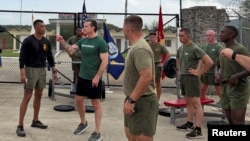
"What happens with the future of Cuba is in the hands of the president of the United States and the leadership of Cuba," said Secretary of War Pete Hegseth. "No matter what, the Department of War is going to be prepared and postured for any possible contingency."
Speaking to American military personnel at Naval Station Guantanamo Bay, Cuba, on June 10, the U.S. Secretary of War said, "It's an honor to be here at Guantanamo Bay. This was then, and is here today, a very important and strategic piece of American terrain."
The base is part of U.S. Southern Command and serves as a centerpiece for U.S. regional security in the Caribbean. It is home to about 3,000 U.S. military personnel and the Guantanamo Bay detention camp, responsible for the safe, humane, legal care and custody of law of armed conflict detainees.
Secretary Hegseth noted that his visit served two purposes: to ensure the detention facility is strong and the service members are equipped, but also to show the world that U.S. military readiness does not just mean on the other side of the globe. "[We want to make sure] the world understands that American might, whether it's 9,000 miles away or 90 miles away from our shores, is the greatest in the world, and [we are] prepared to go on offense or defense at any moment to defend our interests," he said.
In 1823, President James Monroe articulated a foreign policy, now known as the Monroe Doctrine, which declared that the Western Hemisphere was off-limits to further colonization efforts or interference by European nations. Later, that expanded to include interference by any foreign power.
In 1904, Hegseth said, President Theodore Roosevelt added to that doctrine his own take, known as the Roosevelt Corollary, which emphasized that the U.S. could intervene in the affairs of Latin American nations to protect U.S. interests.
Secretary Hegseth told service members that the Monroe Doctrine has been central to the history of the United States. "We're defending the homeland, and we are taking back our hemisphere," he said. "This president came in and said not only is the Monroe Doctrine alive, and not only does the Roosevelt Corollary live, but now we have the 'Donroe Doctrine' — the [President Donald J.] Trump corollary to the Monroe Doctrine. That the territory, terrain in our hemisphere, is key terrain."
The United States is firmly committed to protection of the Western Hemisphere from any foreign threat.