



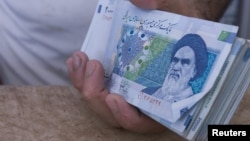
As part of Operation Economic Fury, and in coordination with the Commerce Department and Federal Bureau of Investigation’s Los Angeles Field Office, the Treasury Department’s Office of Foreign Assets Control took action against an Iran-based procurement network. This network impersonated and defrauded U.S. companies in order to procure restricted goods for Iran’s Ministry of Defense and Armed Forces Logistics, or MODAFL, and other sanctioned Iranian end users.
“The Iranian military’s brazen efforts to target and deceive American businesses demonstrate just how far the regime is willing to go to support its malign activities,” said Secretary of the Treasury Scott Bessent.
This action was taken pursuant to an Executive Order, which targets terrorist groups, their supporters, and those who aid acts of terrorism. OFAC designated MODAFL on March 26, 2019, for assisting, sponsoring or providing financial, material, or technological support for the Islamic Revolutionary Guard Corps-Qods Force (IRGC-QF). In October 2007, the U.S. Department of State designated MODAFL and the IRGC-QF.
Additionally, the State Department’s Rewards for Justice program is offering a reward of up to $15 million for information leading to the disruption of the financial mechanisms of Iran’s IRGC and its various branches.
The Treasury Department is maintaining maximum pressure on Iran and targeting the regime’s ability to generate, move, and repatriate funds. Treasury is pursuing Economic Fury and has disrupted tens of billions of dollars’ worth of revenue from being otherwise accessible to the Iranian regime and its proxies. This includes actions that have led to the freezing of nearly half a billion dollars in regime-linked cryptocurrency.
In addition, Treasury has cracked down on Tehran’s global shadow banking networks; designated networks supplying weapons and other military components to Iran; sanctioned a corrupt Iraqi official who has facilitated the sale of oil along with Iran-backed militias operating in Iraq; taken numerous actions against Iran’s terrorist proxies; and targeted shadow fleet vessels, companies, and other entities that sustain Iran’s illicit oil industry.
Through the blockade, the United States is directly targeting Iran’s primary revenue stream. Any person or vessel facilitating the illicit trade of oil or other commodities, through covert trade or financial channels, risks exposure to U.S. sanctions.
Treasury will continue to target both traditional sanctions evasion schemes and the exploitation of digital assets while continuing to freeze funds stolen from the Iranian people. Treasury is also prepared to take action against any foreign company supporting illicit Iranian commerce, including airlines, and, as necessary, may impose secondary sanctions on foreign financial institutions that facilitate Iran’s activities, including those connected to China’s independent oil refineries.
Additionally, Treasury recently warned of the sanctions risk associated with complying with Iranian demands for passage through the Strait of Hormuz such as “toll” payments, including payments made via fiat currency, digital assets, offsets, informal swaps, or other in-kind payments such as nominally charitable donations, and providing sensitive vessel information.
The Treasury Department, said Secretary Bessent, “will continue to use all available authorities to cut off the Iranian regime’s access to the global financial system.”