



“Every day we either move closer to a future where Palestinians in Gaza and the West Bank live in freedom and prosperity [and] at peace with Israel, or we drift back toward chaos, rockets, hostages, and rubble,” declared US Ambassador to the United Nations Mike Waltz. The United States and its partners on the Board of Peace are pushing hard to achieve peace in Gaza.
But there remains one obstacle and that is Hamas, said Ambassador Waltz. “Hamas must accept that they will not have any role in Gaza, directly or indirectly, through weapons and terrorism and violent intimidation.” That means Hamas and other terrorist and militant groups must demilitarize. They must irreversibly surrender their path of terror, and they must move away from the tunnels and weapon production facilities, stressed Ambassador Waltz.
“The United States and our partners on the Board of Peace, in consultation with the National Committee for the Administration of Gaza (NCAG), will continue to press Hamas,” he vowed. “We will not ease up. We will not look away.” Ambassador Waltz urged other nations to also “press Hamas to the path of peace.”
The United States will continue to support the International Stabilization Force as it seeks to enable the NCAG to create the conditions for governance and stability in Gaza. Ambassador Waltz thanked Kazakhstan, Albania, Kosovo, Morocco, Indonesia, and others for offering to put troops on the ground in Gaza so Israeli Defense Forces can withdraw.
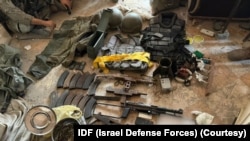
But Ambassador Waltz warned that Gaza will not be safe, free, or prosperous if weapons are shifted from Hamas to another radical group to fuel additional cycles of violence. Hamas’s weapons of terror must be permanently placed beyond reach, insisted Ambassador Waltz. A decommissioning process supported by an internationally funded buy-back and reintegration program is on the table, and Hamas needs to accept the deal they signed up for.
The task facing the NCAG in particular is immense. Since the ceasefire, significant humanitarian aid has been delivered to Gaza. “We are pushing every day to make that process better through the Civil Military Coordination Center and we are pushing every day to expand it,” said Ambassador Waltz. “We know that life in Gaza remains difficult, and uncertainty about the future is high.”
But clearly the main problem holding Gaza back is Hamas, reiterated Ambassador Waltz. “We have a plan for reconstruction and development in Gaza. There is financing. There are partners ready to build. ... The moment Hamas agrees to demilitarize, a new chapter in Gaza’s history will be written.”