



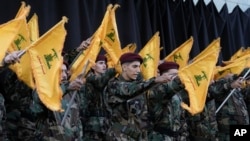
As part of Operation Economic Outcast, the U.S. Department of the Treasury’s Office of Foreign Assets Control (OFAC) has acted against the networks enabling the Iranian regime to wreak havoc in the Middle East through its terrorist proxies. The action, taken on September 10, targets entities and individuals that support Kata’ib Hizballah (KH) and Hizballah.
“Operation Economic Outcast is targeting those who continue to stand with the failing Iranian regime,” said Secretary of the Treasury Scott Bessent.
KH and Lebanese Hizballah fuel Iran’s destabilizing influence in the Middle East, endanger U.S. and partner forces, and facilitate extensive sanctions evasion schemes. Spread across Iraq, Lebanon, the United Arab Emirates, and Türkiye, the U.S. targets underscore the global reach of the Iranian regime’s illicit networks and the serious threat posed by the terrorist proxy organizations that operate on its behalf. The Treasury Department designations strike at the core of Iran’s most dangerous proxies — groups that not only terrorize civilians across the Middle East but also serve as Tehran’s primary instruments for projecting violence, subversion, and global destabilization.
KH is a leading militant faction within Iran’s so-called “Axis of Resistance” and receives training, weapons, funding, intelligence, and logistical support from Iran’s Islamic Revolutionary Guard Corps–Qods Force (IRGC-QF), itself designated as a terrorist organization by the United States.
KH is also the most influential faction within Iraq’s militia-dominated Popular Mobilization Forces (PMF). KH members occupy key leadership positions within the PMF’s governing body, the Popular Mobilization Commission (PMC), including positions that oversee the PMF’s intelligence, missiles, anti-armor, and special forces directorates. Through this influence, KH is a major beneficiary of the more than $2.6 billion in annual Iraqi government funding allocated to the PMF. They siphon the Iraqi people’s wealth to support the Iranian regime, increase their luxurious lifestyles, and support their own terrorist efforts.
The IRGC-QF uses front companies to transfer funds derived from Iranian oil sales to exchange houses in the region. IRGC-QF members in Lebanon work with Hizballah financial officials to receive the funds in Lebanon via several Lebanese money exchangers, to include Hussein Ibrahim and Abdallah Hamieh. U.S.-designated Mohamad Noureddine has also been involved in transferring these funds. Together these Lebanese businessmen and money changers constitute a significant channel for transferring money from the IRGC-QF to Hizballah.
“Whether they finance terror, launder money, or help Iran evade sanctions,” said Secretary Bessent, “we will find them, cut them off from the U.S. financial system, and dismantle the networks keeping the regime afloat.”