



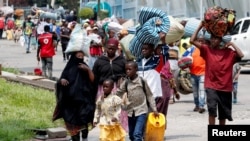
The United States remains committed to achieving peace and ending the displacement of people by fostering the conditions for refugees to return home.
In the Democratic Republic of the Congo, the United States brokered the Washington Accords, which allowed displaced refugees to return home. Ambassador Jennifer Locetta, U.S. Alternative Representative for Special Political Affairs, urged the parties to demonstrate a commitment to enforcing the Accords.
For Sudan, the United States continues to advocate for a humanitarian truce and calls on parties to protect civilians and negotiate in good faith. Humanitarian assistance must be able to reach those in need.
“We have also renewed our efforts towards a swift and durable end to the Russia-Ukraine war through ceasefire and negotiated settlement,” said Ambassador Locetta. “We continue to support the return of all civilians, especially children, who have been displaced or forcibly transferred as a result of this conflict.”
For 50 years, Algeria has hosted Sahrawi refugees, making it the world’s 2nd longest-standing refugee situation. There is a window of opportunity to end this protracted political dispute and give these refugees a chance at a dignified and free future.
In all these cases, “deterring and ending displacement – rather than just managing it year after year – must be the goal,” declared Ambassador Locetta.
In 2025, the United States contributed more than $1.4 billion in humanitarian assistance to various UN agencies to address refugee crises around the world. The United States has additionally provided billions of dollars through the UN Office for the Coordination of Humanitarian Affairs.
The international system cannot continue to treat forced displacement as a burden for only host and donor states, said Ambassador Locetta. “Origin-country actors must finally face accountability.”
That means governments in countries of origin must create conditions for returns and promptly accept their returned nationals.
“We also believe that the [UN High Commissioner for Refugees] has a key role to play in fostering refugee returns. ... We urge UNHCR to remain at the forefront of these worldwide efforts to support refugees, so that they may finally return home.”
“The global refugee and asylum system, however, cannot be sustained without significant reforms,” warned Ambassador Locetta. “UNHCR’s most urgent priority should be to advance changes that halt the abuse of asylum mechanisms by economic migrants – perhaps the most powerful driver of mass migration.”
The United States looks forward to the long-overdue reforms to uphold national sovereignty and eliminate incentives for fraudulent abuses of the international protection system.