



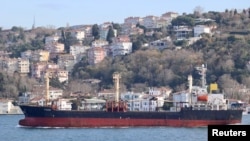
U.S. Secretary of State Marco Rubio called on China to stop detaining and delaying Panama-flagged vessels in its ports, noting that these actions “raise serious concerns about the use of economic tools to undermine the rule of law in Panama.”
The detainments, lasting one to 10 days according to news reports, are part of what the U.S. sees as a campaign of harassment in retaliation for Panama’s January Supreme Court decision invalidating the legal framework that supported Hong Kong-based company CK Hutchison’s concession to operate the Balboa and Cristóbal terminals on the Pacific and Atlantic sides of the Panama Canal.
The lawsuit was brought before Panama’s Supreme Court last year, after audits alleged irregularities, including exclusive privileges and tax exemptions in the 25-year extension of the concession in 2021. Following the ruling, the Panamanian government appointed two U.S. subsidiaries as interim operators for an 18 month period.
The Chinese government has rejected the ruling and the Hong Kong company has escalated an arbitration campaign against the Panamanian government seeking more than $2 billion in damages.
“This sovereign ruling upheld transparency, the rule of law, and held private operators accountable to the public interest,” said Secretary Rubio in a statement. “The judgment also makes clear that Panama is a reliable partner for international investment and business opportunities.”
U.S. Federal Maritime Commissioner Laura DiBella noted that the surge in detentions, while carried out under the guise of port state control “far exceeds historical norms.”
“These intensified inspections were carried out under informal directives and appear intended to punish Panama after the transfer of Hutchison’s port assets. Given that Panama‑flagged ships carry a meaningful share of U.S. containerized trade, these actions could result in significant commercial and strategic consequences to U.S. shipping,” she wrote.
More than 8000 vessels are registered under the Panamanian flag, according to the Panama’s government. The fleet accounts for approximately 16 percent of global tonnage. In March, Chinese ports detained 124 ships for inspection. Ninety-two of those were Panama-flagged, accounting for about 75 percent of detained ships.
“Detentions, delays or other impediments to the movement of vessels undermine the stability of global supply chains, increase costs for businesses and consumers, and erode confidence in the international trading system,” said Secretary Rubio.
Commissioner DiBella said in her statement that the Commission is closely monitoring the developments.
“Actions by foreign governments that detain, delay, or otherwise impede the movement of vessels documented under U.S. law - or vessels of other nations engaged in commerce with the United States - are inconsistent with the Commission’s mandate to protect the reliability and integrity of America’s global supply chain.”
“The United States,” said Secretary Rubio, “Stands firmly with Panama and looks forward to increasing our economic and security cooperation with this important partner.”
Anncr: That was an editorial reflecting the views of the United States Government.