



In July 2021, as thousands of citizens rocked Cuba with unprecedented protests, a Spanish hip-hop song went viral on social media and the title, a play on words that overturned one of Fidel Castro’s pet phrases, echoed through the crowds. “Patria y Vida,” or “Homeland and Life” replaced the communist slogan “Patria o Muerte” or “Homeland or Death.” The song, written by a collaborative of artists based in Miami and Cuba, discussed the failures of a regime that had been stealing from its people and became the anthem of those seeking hope and rebirth for their nation.
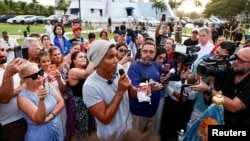
The words rang out again recently, this time through the Miami airport as supporters gathered to greet former Cuban prisoner of conscience Luis Manuel Otero Alcántara. The dissident artist and musician, who coauthored the song, was sent to a maximum-security prison on charges of “public disorder” and “defamation of national symbols” after the 2021 protests and has just been freed on the condition of accepting exile from the same homeland.
U.S. Secretary of State Marco Rubio welcomed Otero Alcántara, calling him ‘courageous’:
“Otero Alcántara’s only “crime” was refusing to stay silent and using his art to demand the basic freedoms everyday Cubans have been denied for almost seven decades,” said Secretary Rubio. “The regime’s fear of everyday Cubans speaking the truth of living under communism and constant repression was evidenced by their cowardice in imprisoning Otero Alcántara. For daring to imagine a free Cuba, he was harassed, detained, and imprisoned time and again but today, he is in exile.”
Secretary Rubio also commended the San Isidro Movement, a collective of artists, journalists and activists which Otero Alcántara helped build, that have championed the right of freedom of expression in Cuba. He called the group “a beacon of hope for a generation of Cubans who refused to live under tyranny.”
Many of those who have peacefully protested the Cuban regime remain in prison, as do some of Otero Alcántara’s fellow artists. These include a coauthor of the anthem and cofounder of the San Isidro Movement Maykel Castillo Perez.
“We call for the immediate release of the more than 700 unjustly detained political prisoners held by the regime,” said Secretary Rubio.
Otero Alcántara raised their case as well: “We are going to keep working so that Cuba can be free. Because a free Cuba means there will be no more mothers or wives with loved ones who are political prisoners,” he said.
“The international community must stop turning a blind eye to the human rights abuses of the Cuban regime and join us in demanding an end to their repression,” said Secretary Rubio.